- On 18th December 1854 Samuel, and his second son Henry arrived in Melbourne on the ship the James McHenry
Children under 14 were given free passage at that time. Henry was 13 otherwise Samuel would have brought his eldest son, Charles Faircloth Smith.
We assume they went to the Victorian Goldfields, but have no records to go on.
1858 Next heard of at Kings Belt, She Oak Log, South Australia
1864 - 1871 Whitwata, (not far from Mt Templeton)
13 October 1867 married Elizabeth Brooks, the widow of Joseph Brooks, who had died at Hoyleton, South Australia, in 1860.
1874 Jamestown, South Australia, Australia, Lime burning and Brick Yard business.
1883 Promoter of the Gipsy Girl Silver Lead mine, Thackaringa, Barrier Ranges, New South Wales
Died 14 December 1889, buried at Jamestown
The Family marked his grave 18th April 2004
- A MOST CHEQUERED CAREER: Samuel Smith, Limeburner, Jamestown, S.A.
By John H Smith
A long and varied life was brought to a close when Samuel Smith died at Jamestown, South Australia, on 14 December 1889. ~ Samuel Smith, who had been a resident of Jamestown since 1874, was well known and liked, yet his grave has remained unmarked and his story untold to the present day. 2 His obituarist wrote -
Another of the pioneer residents of our district has joined the great majority, we refer to Mr. Sam Smith who has for many years past carried on business as a limeburner in Leamington. He was one of the oldest inhabitants of the district and has led a most chequered career. He was one of the first to discover silver ore at Broken Hill, and it was only want of capital and influence that prevented him from turning his discovery to good account. Mr. Smith, who had reached an advanced age, had been ailing for some months past so that his decease was not altogether unexpected. The funeral, which took place on Saturday evening, was very largely attended by residents of the town and district.3
_________________________
1 Death Certificate, District of Clare, 1889, No. 22, 11 January 1890.
2 My thanks to Barbara Parri and Ron Wenham of Jamestown, Katharine Massam of Adelaide, and the Archivist of the Mines Department, New South Wales for their assistance with the research for this paper.
3 The Agriculturalist and Review, 18 December 1889, p.3.
Sam was born on 1 April 1811 at Appletree, Great Waltham Essex, the seventh child of Peter and Elizabeth Smith (nee Faircloth). At that time the Smiths were a family with strong Quaker roots that can be traced to the beginning of the movement in the seventeenth century. Many of Sam's ancestors, and one of his sisters, lie in the Friends' burial ground at Stebbing, in Essex. Humphrey Smith, a gifted and influential Quaker preacher who was confined to Winchester Prison, where he died for his beliefs in 1663, was linked to the family by marriage. While in prison Humphrey wrote a letter to his son, which was later published as a broadsheet and circulated widely. George Fox (1624-1691), regarded as the founder of the Quakers, visited Humphrey in prison before he died.4
The Smith family moved from Essex and we next learn of Sam through a letter that he wrote from London to his brother Peter, in Warwick, in 1833. Sam was contemplating emigration and explained the various options to his brother, who at the time was out of work.
New South Wales is full (of prospect) before America. New South Wales is a British Colony, and it is very prosperous, perhaps more so than any other in the world. I told thee in my last, that it is contemplation to form a new colony in Western Australia. Government have applied and are favourable to it, they have offered to sell any person as much land as they please to have at 5/- per acre and will agree to lay out the same money (that is, the same amount) either in making roads or in erecting public Buildings there, the wishes of the colonists would be pretty much acted upon, so that Government do not want to make any profit whatever, more favourable terms cannot be had I think, and it is without exception the most temperate place in the worid.5
Sam told his brother that the proposers of the scheme were 'Friends', which suggests they were Quakers, who were dealing with Captain Stirling himself, and later advised that the prospectus for the scheme would soon be available. Sam was pro-British, which may have been a factor in his preference for New South Wales over rebellious America.
With respect to the manners of the people at NSW they are all English, or nearly so. It appears that wool is the staple article of the country which they grow in
_________________________ 4 George?s Fox, Journal, 1891', i', p.253.
5 Letter, Samuel Smith to Peter Smith, 23 January 1833, in possession of the author (hereafter Letter).
great quantities and send it here in the raw state. I should not object to go at all, and take out good that will sell there.6
The fare to NSW cost twenty-five pounds and the journey lasted three or four months, compared with the trip to America, which took six weeks. Sam may have had a gullible streak or else we must assume that the promoters of the Swan River scheme were particularly successful at their task for he had seen a map of the country from which he was able to deduce that it was a "beautiful place". While labour in New South Wales was regarded as rare and expensive, because there were no rates and taxes and every one was a land owner, Sam had learned that good quality provisions were very cheap, "some good meat and potatoes... as fine as any in Smithfield Market".7
Sam's investigations enabled him to offer an opinion on the benefits of transportation, which he had formed after talking with the brother of a man who had just returned from New South Wales.
He was transported there for 14 years for something he did here and has now returned to England with a fortune of said to be 20,000 pounds, and he has a fine mansion now a little way from London. Good transport for him. I think it would be well to send a few more there... [Now ] that they are in the most flourishing state.8
Judging by his letter, Sam was something of a dreamer and adventurer who was looking for an opportunity to make good in the world. It was to be fifty years before he would arrive in New South Wales and, although his excursion to the Barrier Ranges in 1882 promised to yield the fortune he had so often dreamed about, he was eventually disappointed.
On 25 October 1836, three years after he wrote to his brother and recorded his interest in Australia, Sam married Elizabeth, daughter of William and Louisa Sheasby, at St Margaret?s Church of England, Wolston, Warwickshire. He appears to have lived in or around Warwickshire until approximately 1854, where it is believed he worked as a stone mason. Sam and Elizabeth had their first child, Charles Faircloth Smith, on 15
_______________________ 6 Letter, 23 January 1833.
7 Letter, 23 January 1833.
8 Letter, 23 January 1833.
April 1838, followed by Henry, who was born on 15 November 1839. Six more children were born, but before Louisa, the seventh and last arrived on 18 December 1854, Samuel and Henry had left to seek their fortune in Australia. We don't know what made Sam choose the attractions offered by South Australia over his pregnant wife, but at the time eight of his nine children had survived and there can be little doubt that the hope of making good in order to provide for his family formed part of his motivation for leaving them behind.
In South Australia Henry formed a partnership that produced many children. In the twenty-four years between his marriage to Harriet Fisher, in 1861, and her death in 1885, sixteen Smiths were added to the line, of whom twelve survived into adult life. The impression gained from a photo of Harriet taken shortly before her death in 1885 suggests that she may have expired from exhaustion. 9 However Henry lived to a grand old age, after many years as a successful farmer in the Mt Templeton district of South Australia. He was strongly associated with the Methodist Church where he served in the Sunday school for nineteen years, first as a teacher and then as Superintendent10. While he seems to have had a gruff exterior, the evidence suggests that he loved children11. Henry retired from farming and took up residence in the nearby town of Balaklava and when he died on 28 December 1917, aged 78, he left behind him two sons, ten daughters, thirty four grandchildren, and two great-grandchildren12. Despite the efforts Henry and Harriet, the Smith name did not carry on in South Australia. Henry's two sons, George and Henry, or 'Harry' as he was known, took advantage of generous concessions the Western Australian Government offered to aspiring farmers and, in 1903, took up land at Ballaying in the Great Southern district of that state.
Exactly how fortune dealt with Sam Smith, after his arrival in Australia, is more difficult to discover, and it is possible that there was some interest in suppressing his memory. During the 1860s his son, Charles Faircloth Smith was sued by the parish for the support of his mother, Elizabeth Sheasby Smith, because she was regarded as
__________________________
9 Photo of Henry and Harriet Smith, with Emily, a daughter with clubfeet, in the possession of the author.
10 Illuminated Address, presented to Henry Smith by the Minister and Officers of the Mt Templeton Wesleyan Sunday School, September 1892, transcript in the possession of the author, original in the possession of Alice Smith, nee Wood, Victor Harbour, South Australia.
11 Conversation with Alice Smith, nee Wood, Victor Harbour, 26 October 1984.
12 The Adelaide Observer, 12 January 1918, p.20.
destitute. If Samuel had found his fortune he had had not transmitted his wealth home to his family. However it seems that the latter part of the 1860s proved to be prosperous for Samuel in some different ways.
On 13 October 1867 Sam Smith married Elizabeth Brooks, is the widow of Joseph Brooks, who had died at Hoyleton, South Australia, in 1860.14 The Brooks, who arrived in South Australia in 1838, had eleven children, born between 1835 and 1855, eight of whom survived at the time of Elizabeth and Sam's marriage. Joseph Brooks had been a farmer, miller and lime-burner, which may provide a clue to how Sam found himself engaged in a similar occupation during his final years. Elizabeth, who was born in 1815, marked the certificate of her marriage to Sam with a cross, is which may suggests that she was unable to write. But for five years after Sam's death, until she died on 24 April 1894, Elizabeth ran the lime-burning business, which from 1878 also included a brick kiln16. It is possible that Elizabeth brought some wealth to her marriage with Sam, and if not, it is clear that she had her share of business acumen. Sam's first wife, Elizabeth Sheasby Smith, outlived both him and his second wife. She died on 19 August 1894 after suffering from blindness for many years. It is possible that Elizabeth Sheasby Smith's blindness was congenital, but one wonders what it meant to her that she was abandoned by Sam, and if she knew that he had committed bigamy. We also do not know whether Elizabeth Brooks Smith knew of Sam's bigamy. The descendants of the family that remained in England have photos of Sam and Henry which date from 1860 and include one of Sam taken in 1882, but it is not known at what stage these came into their possession.
The marriage certificate of Sam and Elizabeth Brooks reveals that in 1867 he lived at Whitwarta, not far from his son Henry's farm at Mt Templeton, and his occupation is given as 'Inn-Keeper'. Sam was indeed the Licensee of this Hotel and it is said that, between 1868 and 1870, under his management-
This hotel had the reputation of being the "Honeymoon Centre" for the elite of the Balaklava Township and district17.
_____________________ 13 Marriage Certificate, District of Auburn, 1867, No. 5, 30 October 1867.
14 Biographical Dictionary of South Australia, Voi. 1, p. 183.
15 Marriage Certificate, Distdct of Auburn, 1867, No. 5, 30 October 1867.
16 Photo provided by Ron Wenham of Jamestown, taken about 1920.
17 The Balaklava Centenary Book Committee, BALAKLA VA: change and challenge, p. 47.
Sam, the bigamist and Inn Keeper, appears to have been a convivial and hospitable host, but he would seem to have moved a long way from his Quaker upbringing, and just as far from the Methodist church to which Henry had become so dedicated.
The area centred on Jamestown was opened up to farming from 1870. People began to reside there after the township was surveyed in 1871 and a district council formed in 187518. Sam and Elizabeth Smith, who were early residents in the district moved into Jamestown no later than the beginning of 187419. Limeburning must have been a profitable business because between 1874 and 1879 Sam and Elizabeth added 16 blocks to their holdings, which amounted to many acres of land, and in 1878 extended the business to include a brick yard. Bricks were sold for two pounds ten shillings per thousand and it was advertised that there was a cart available at the kiln20. Whether or not it had always been so for Sam, he was now an entrepreneur of some substance, well positioned to take advantage of the changes and growth that were to take place in the Jamestown area in the next decade.
During the late 1870s, when the copper mines at Burra, south east of Jamestown, had begun to decline, prospectors turned their attentions to the southwest corner of New South Wales, in the area of the Barrier Ranges just over the border from South Australia. The Barrier Ranges did contain minerals, but it was silver, not copper that was discovered at Thackaringa in 1876. Patrick Green, a storekeeper from Menindie, and A.L Garot, a watchmaker from Wilcannia, applied for a lease and established the Pioneer Mining Company21. The partners shipped bags of silver bearing ore down the Darling River by steamer to be treated at smelters in England, but they were jettisoned at sea during a storm22. Green died in 1880 but his brother, and Garot, continued to work the mine and sent more ore for analysis. Nearly two years later the results were
__________________________
18 A Tour of Jamestown, National Trust Brochure.
19 National Bank Document 31 January 1874, From Register General to S. Smith. Lime Burner, Lots 627 and 628, Jamestown. Information provided by Barbara Patti, Jamestown.
20 Information provided by Barbara Parri, Jamestown, 'Ref N. Robinson's notes'.
21 Kearns, R.B.H Silverton: a brief history, Broken Hill Historical Society, Broken Hill, t 972,p.5, (hereafter Silverton).
22 Blainey, G. The Rush That Never Ended. a history of Australian mining, Melbourne University Press,
Carlton, 1969, p. 136, (hereafter Rush).
returned to them; their ore contained thirty five ounces of silver per ton23.
The discovery of gold at Mt Brown and Milparinka, two hundred miles to the north of Thackaringa, attracted more prospectors to the area24. By 1883 several other claims had been pegged and there were 130 men living and working around Thackaringa. The population rose to 300 before the silver ran out in 1897 and the miners moved on to Silverton and Broken Hi1125. The Thackaringa mines were given colourful names such as Lady Brassey, Hercules, Goat Hill, Homeward Bound, Dan O'Connell, and the Gypsy Girl.
Jamestown was deeply affected by this surge of interest in prospecting and mining. Prospectors and fortune seekers from the south passed through the town on their way to the fields, many residents invested money in speculative ventures, and the farmers who lived in the surrounding the district prospered through the sale of their products to feed the booming population. Mining fever spread to Jamestown itself, local 'finds' were reported and blocks were pegged. Lake, the editor of the local newspaper, wrote enthusiastically of these developments.
Mining and 'nothing but mining is the general topic of conversation... Companies are being floated and blocks are being pegged out in every direction... extending from Jamestown almost the whole way to Spalding26.
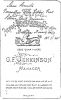
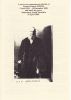
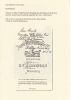
Sam Smith was caught up in this fever, and although now seventy years of age, could not resist the lure of the opportunities that he believed awaited him in New South Wales. Sometime in 1882 Sam set out, we don't know how, to prospect at the Barrier Ranges. He arrived at Thackaringa where he found Green and Garot's Pioneer Mine lying idle. It was clear to him, however, that there was still plenty of ore to be had in the area, so he applied for mineral leases27, and named his mine the Gipsy Girl. The original of the photo we have of Sam that accompanies this article is inscribed on the
____________________________ 23 Dickinson, K.J. Mining History of the Silver, Lead, Zinc, and Copper Mines | the Broken Hill District to 1939, excluding the Main Line of Lode, Department of Mines, Geological Survey of New South Wales, Bulletin 21, p.5, (hereafter Mining).
24 Robinson, N. Change on Change: a history of the Northern Highlands of South Australia, Australian
Lutheran Publishing House, 1971, p.188, (hereafter Change).
25 Kearns, R.B.H. Silverton, 1972, p.6.
26 Robinson, N. Change, p. 189.
27 Dickinson, K.J. Mining, p.6.
back SAM SMITH, PROMOTER OF THE GIPSY GIRL SILVER LEAD MINE, THACKARINGA, BARRIER RANGES, NSW.
Fortune seemed to be within Sam's grasp, but he was in for a shock. The claim he had pegged was covered in part by 'mineral conditional purchases' for which Green and Garot had already applied. When Green and Garot discovered what Sam had done they immediately applied to the Supreme Court of New South Wales for an injunction to prevent him from doing further work28. The lengthy litigation that followed resulted in the court upholding the claim of Green and Garot against Sam Smith29. The Thackaringa correspondent to Garors Local paper, the Wiicannia Times, wrote-
...the dispute about the lease 7 over 6 at Thackaringa has been decided in
____________________________ 28 Dickinson, K.J. Mining, p. 6. 29 Supreme Court of New South Wales, Equity Claim 3316/1883, Garot vs Smith.
favour of Mr Garot of your town, and... operations on a large scale will be
forthwith commenced at the claim30.
And in 1884 the Silver Age, which had the habit of reporting on the workings of
individual mines in the area said of the Gypsy Girl -
Until recently the ground upon which this mine is situated was known as the 7 over 6 block, and its possession, it will be remembered, was the occasion of a rather serious and protracted lawsuit. Since settlement of the case work has proceeded energetically under the management of Mr. J. H. Ellis, who has since raised and dispatched over 700 tons of ore for satisfactory results31.
By the end of September that year 900 tons of ore had been extracted valued at
13,500 pounds.32 The Gypsy Girl was capitalized at 32,000 shares of one pound each. In 1888 the called up capital amounted to 8,000 pounds and 3,400 pounds had been paid in dividends33. The wealth Sam had so long hoped for had slipped from his grasp. The news of the litigation against Sam served to draw attention to the potential wealth that awaited discovery in the Barrier Ranges, and no doubt others were inspired to seek fortune there as he had done. Sam, however, can only have been impoverished and deeply disappointed by the outcome of his explorations.
Sam returned to Jamestown where he lived for the next six years. How active he was in running the limeburning and brick making business we cannot tell, but his health began to decline and he died. On a hot Saturday evening in December 1889 Sam Smith was laid to rest by the Baptist Minister, the Revd W Jones, in plot number 24, block B, row P of the Jamestown cemetery, where has lain unrecognized ever since. His obituarist did not mention his marriage of twenty-two years to Elizabeth. Perhaps it was an oversight or perhaps it was an act of discretion, but more likely the latter.
After Sam's death, Elizabeth ran the business until her own death five years later. She is buried in Jamestown cemetery but not next to Sam, though the empty plot next to him may have been reserved with her in mind. Of Elizabeth her obituarist wrote -
__________________________ 30 Wilcannia Times, I March 1883, p. 1. 31 Silver Age, 13 September 1884, p. 1. 32 Curtis, L.S. History of Broken Hill, 1908, p.6 33 Dickinson, K.J. Mining, p. 24.
Another of the old identities of the colony passed away on Friday last in the person of Mrs Sam Smith, who for many years has resided in Jamestown. Mrs. Smith, who, had she lived, would have been 80 years old on the 24th of next month, came to the colony in the ship Eden in the year 1838. She was then Mrs Jos. Brooks and married Mr. Smith some 20 years ago. She had nine sons and three daughters and leaves behind her 82 grandchildren and 65 great- grandchildren34.
Elizabeth was laid to rest at a service conducted by the Methodist Minister, the Rev'd Nancarrow, in plot number 16, Block B, Row U of the Jamestown cemetery. Eighty-five years later a special ceremony was held at her grave and a stone unveiled which omits any reference to Sam.
This tablet was erected by her descendants in 1979 to the memory of Elizabeth
Smith, born Elizabeth Stokes, at Powick, WorceStershire, England. Formerly
Elizabeth Brooks, wife of Joseph Brooks, and mother of their eleven children.
Arrived at Port Adelaide in the ship Eden, 24th June 1838. Died Jamestown,
21 April 1894, aged 80 years. Joseph Brooks died in 1860 and is buried at
Penwortham 35.
Several months after the death of Elizabeth Brooks Smith in Jamestown the death in England of Sam's first wife, Elizabeth Sheasby Smith, closed the final chapter of life in his 'most chequered career'.
Given his Quaker roots, and the devout Methodism of Henry his son, Sam Smith led an unorthodox life in several respects. The occupation of innkeepers was an unlikely one for someone from his tradition, and his bigamy, if it were known at the time, would have put him beyond the pale in most circles.
Sam was a dreamer who hoped for something better out of life. It is this spirit that is evident in Sam when we find him, at the age of twenty-two, researching the various options available through emigration. This same spirit led him to leave his wife and
_________________________ 34 The Agriculturalist and Review, 24 April 1894, p. 2. 35 Transcription provided by Barbara Pard of Jamestown.
family in England and travel to Australia where, with his son Henry he became the founder of a vast family that continues to this day in every part of the country. The spirit that was in Sam at the beginning did not die out as his years increased. At the age of fifty three, perhaps to escape controversy over his marriage, or more likely because he wanted to seize a new opportunity, he moved from Whitwarta to the newly established town of Jamestown where he and Elizabeth commenced their limeburning business which soon grew to include the brick kiln. Once in Jamestown Sam added many acres of land from near the town to his holding.
Finally at the age of seventy one his spirit was unable to resist the call of the new mineral field that was opening up in the arid southwest corner of New South Wales. When others would have relaxed and allowed the passing parade to go by, Sam set out for the Barrier Ranges where he boldly sought to claim a share of the riches that awaited discovery there. No doubt Sam did not intend to jump a mining claim, but the error he made in applying for his mineral lease was serious, and led Garot and Green to mount a fierce defense. The cost of litigation must have been substantial, and it is likely that Sam had to sell property to cover costs. "Want of capital and influence... prevented him from turning his discovery to good account" but at least the limeburning and brick making business remained intact to support Elizabeth after his death.
Judging by the number of people who were reported to have attended Sam's funeral, it is evident that the residents of Jamestown regarded him with affection. He had no doubt provided materials used in making most of the shops and houses built in the town from 1874. It is possible to imagine that in the fifteen years before his death in 1889 he regaled his customers with the stories of his exploits, particularly in connection with the Gypsy Girl silver lode mine at Kurnalpi. We do not know if any of the Jamestown residents knew that he was a bigamist, or even if Elizabeth knew, though the fact could not have escaped his son Henry. Although Sam did not produce offspring in his new homeland, because his second wife was past the age of childbearing at the time of their marriage, Henry's descendants have spread out to all parts of Australia. And, as a result of the family Sam he left behind in 1854, there are as many descendants to be found in England.
*********
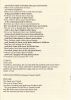
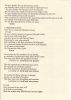
Appendix 237 LETTER FROM SAMUEL SMITH TO HIS BROTHER PETER
Peter Smith POSTMARK
Baker R
Livan St 23 Jan
WARWICK 1833
London I Mo 23 1833
Dear Brother,
Thy letter of 1 Mo 16 I duly received and writ to inform thee, that I wrote to bro Chas. last week requesting him to write to I Inper and request him to pay the rest due thee and I shall also do all I can to obtain it for thee. By what thee say upon what thee paid me, it appears to me that thee think I have charged thee more than I ought to have done, or more than I paid for thee. I can only say thee must think what thee please about it, but I know l did not charge thee more than I paid except the Int. I know I have been paid all thee owed me, by my own account, it is not much likely that I should submit to any other persons account, and should be been very foolish not to charge thee what I spent for thee, but whatever thee are satisfied with the correctness of what thee have paid me or not, I can only say, thee have not been overcharged by me. Thee seem to complain rather harshly of Robt Marriage by saying he don't care a pin whether thee are ever paid or not, before thee say anything more upon R marriage's case, about thee, thou had better consider a little what thee are about, recollect RM accepted the appointment of Trustees for us and Guardian for thee, without fee or reward, but acted as a Friend and I think the trouble he has already had is quite sufficient without troubling him with an enquiry into it, by any other person. R Marriage considered when we sold the land there was no occasion for him to interfere further about it and for one, I should certainly object to give him any more trouble about it, he has given his acc't, as I said before, and the Bills which he paid me have not been charged again and what he had paid us is all he rec'd, there fore all that is to be done, or can be, is to demand the rent of Mr. Lisper, he ought to have paid it when he signed the deed, but I suppose it was forgot. However I shall do all I can to get thee money, for I think we ought to do it, without troubling RM anymore, but if thee set any Friend to enquire, what RM has done with the money, I will not take any more trouble to get it, neither will I give thee or any other person, Bills or any account whatever of what the money was paid me for, for I consider it decidedly wrong to trouble RM, thee will have no doubt be paid but it is I inper's fault. I am sorry to hear thee are out of employment, but thee are not worse off than many others. Br MBS has nothing to do, and what is worse, no money, therefore I can only recommend patience. I have much to contend with, and so has everyone now with regard to Emigration. I should by no means advise thee to go to America, it is not the best place to go. New South Wales is full of opportunity before America. New South Wales is a British Colony, and it is very prosperous, perhaps more so that any other country in the world. I believe I told thee
________________________ 37 Copy in the possession of the author.
in my last, that it is in contemplation to form a new colony in Western Australia. Government has been applied to and are favourable to it, they have offered to sell any person as much land as they please to have at 5/- per acre and will agree to lay out the same money (that is, the same amount) either in making roads or in erecting public Buildings there, the wishes of the Colonists would be pretty much acted upon, so that Government do not want to make any profit whatever, more favourable terms cannot be had I think, and it is without exception the most temperate place in the world. The proposers of this are Friends. I have seen one of them today and he tells me that he shall see Capt Stirling upon it again this week and will let me know the result tomorrow. I will give it thee on this then thee will have it in full. With respect to the manners of the people at NSW they are all English, or nearly so. It appears that wool is the staple article of the country, which they grow in great quantities and send it here in the raw state. I should not object to go at all, and take out goods that will sell there. And I know a young man who is going in 3 or 4 weeks. I went to the docks last week to look at the vessel. It was advertised last 7th day in the times paper, called Warrior, for Sydney and Hobart town. You may go for 25 pounds, it?s about 3 or 4 months voyage. New SW is about a month's voyage beyond Swan to the same tract of land, only at the opposite point. I have seen a plan, a Map of the Country and it appears a beautiful place. Recollect there are but few Taxes, no rates or anything of the king, and labour in NSW is very dear, hence the rise in these things, but-provisions are exceedingly cheap. I don't know the price of bread, but some good meat and potatoes, the Capt told me are as fine as any in Smithfield market, The distance to America is about 6 weeks voyage - or thereabouts. I have told Br MBS he had better go, but he has nothing to go with. I think I shall see a person shortly who came from New SW, a little time since. His name is Towell, and has a brother living at one of the Coines near Cof I (?). He was transported there for 14 years for something he did here and has returned to England with a fortune of said to be 20,000 pounds and he has a fine mansion a little way from London. Good transport for him. I think it would be well to send a few more there, all the accounts brought here state that they are in a most flourishing state.
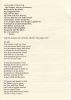
4th Day. I have seen the Friend again upon the Emigration and he tells me that Capt Stirling is favourable and that they intend to accept the terms offered by Government, and then intend to publish their prospectus immediately, they expect that some persons will be ready to go in 6 weeks or 2 months time, and he tells me that Government have offered (in addition to selling you land at 5/- per acre) to give every purchaser who takes out a wife 80 acres for nothing, so that if thee get married first thee can have 80 acres for nothing, that is certainly a great advantage. I expect to hear more about it soon and if thee are inclined to go thee can write one word the first opportunity. I quite think it will go on and happen. I see there is a Society established at Lemineck(?) for Emigration so it seems likely that many shall leave England for various places in the Spring, although this is a new Colony yet I think it will not be attended with the difficulty that was experienced as Swan River. Br Peter was going there once, but I hope he is now doing well. With Love. I am thy affectionate Brother, S. Smith.
|

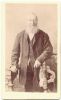
 1811 - 1889 (78 years)